
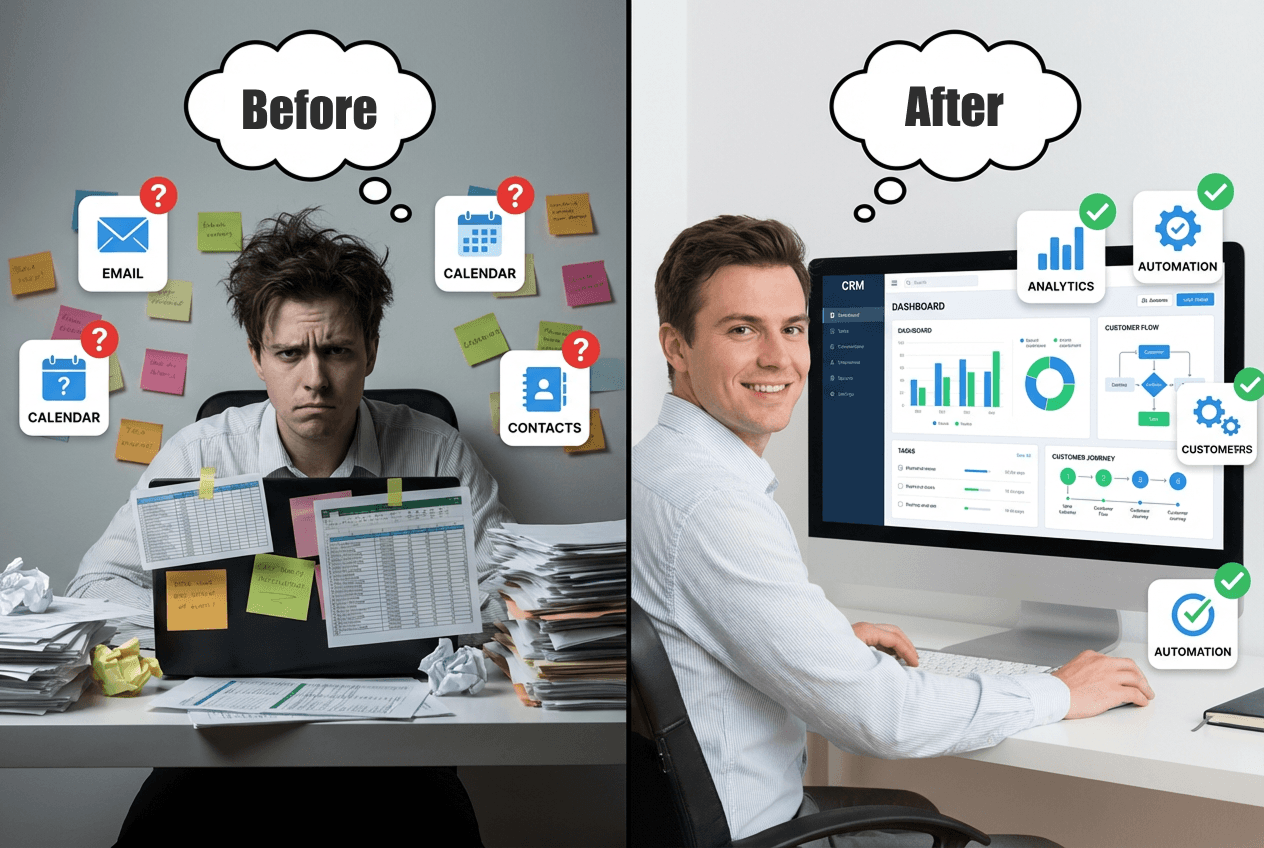
In today's digital business landscape, a robust Customer Relationship Management (CRM) system isn't just a nice-to-have, it's essential for growth. Yet for many businesses, the journey from recognising this need to implementing an effective CRM solution can feel overwhelming.
At Offline Insight, we've guided dozens of organisations through this process, and we've discovered that the most successful CRM implementations begin not with technology selection, but with strategy and preparation.
Why Most CRM Implementations Fail
Before diving into how to start your CRM journey, let's understand why so many implementations struggle:
Technology-first approach: Choosing a CRM platform before defining business requirements
Lack of clear objectives: Implementing a CRM without specific business goals
Poor data preparation: Migrating messy, inconsistent data into a new system
Insufficient adoption planning: Neglecting to prepare teams for the change
Fragmented implementation: Creating new silos rather than unifying systems
According to research from Gartner, nearly 50% of CRM projects fail to meet expectations. The primary reason? A focus on technology rather than business processes and people.
Starting with What You Already Have
We believe that most businesses already have the data they need to succeed. Our job is to help you use it effectively.
Step 1: Audit Your Current State
Before selecting any CRM platform, conduct a thorough audit of your existing systems and processes:
What customer data do you currently collect?
Where does this data reside? (Spreadsheets, email, accounting software, etc.)
What are the current workflows for managing customer relationships?
What are the pain points in your current processes?
Which teams need access to customer information?
This audit serves two purposes: it helps you understand your requirements, and it prepares you for eventual data migration.
Step 2: Define Clear Business Objectives
A CRM isn't a solution in itself—it's a tool to achieve specific business outcomes. Define what success looks like:
Increase sales conversion rates by X%
Reduce customer response time to under X hours
Improve customer retention by X%
Generate X% more repeat business from existing customers
Reduce administrative work by X hours per week
These measurable objectives will guide your implementation and help you evaluate success later.
Step 3: Map Your Customer Journey
Understanding your customer's experience with your business is critical for effective CRM implementation. Map each touchpoint from first awareness through to ongoing service:
How do prospects first discover your business?
What information do they need at each stage?
Which team members interact with customers throughout the journey?
What are the key decision points and potential bottlenecks?
This journey mapping helps identify where a CRM can have the most impact and which processes require automation.
Selecting the Right CRM Platform
Only after completing the first three steps should you begin evaluating specific CRM platforms. There are numerous options, from global solutions like Salesforce and HubSpot to local alternatives tailored for specific industries in your market.
Consider these factors when selecting a platform:
Scalability: Will it grow with your business over the next 3-5 years?
Integration capabilities: Can it connect with your existing business systems?
Customisation options: Can it be tailored to your specific processes?
Ease of use: Will your team actually adopt it?
Mobility: Does it offer the mobile access your team needs?
Support and training: What resources are available to help your team succeed?
Data security and compliance: Does it meet Australian privacy requirements?
Remember that the "best" CRM is the one that fits your specific business needs, not necessarily the one with the most features or the highest market share.
Planning for Successful Implementation
With your strategy defined and platform selected, planning for implementation becomes crucial. Here are key elements to include in your implementation plan:
Data Migration Strategy
Data is the lifeblood of your CRM. Plan carefully for how existing customer information will be cleaned, standardised, and migrated to the new system.
Establish data standards and formats
Clean and deduplicate existing records
Determine which historical data to migrate
Create a verification process for data accuracy post-migration
Integration Planning
Your CRM shouldn't exist in isolation. Plan how it will connect with other business systems:
Marketing automation platforms
Accounting and billing systems
E-commerce platforms
Support ticketing systems
Email and communication tools
These integrations create a unified view of your customer and eliminate manual data entry between systems.
Adoption Strategy
Even the best-configured CRM will fail if your team doesn't use it. Plan for successful adoption:
Involve end-users in the design process
Create role-specific training programs
Identify and empower internal champions
Establish clear expectations for usage
Measure and recognise adoption success
Taking the First Step
Beginning your CRM journey doesn't require a massive immediate investment. Start small, with clear objectives and a focus on solving specific business problems.
Consider these initial steps:
Document your current customer management processes
Identify your biggest pain points and opportunities
Define clear, measurable objectives for improvement
Consult with experts who understand both technology and business process
Develop a phased implementation plan that delivers early wins
Remember that successful CRM implementation is a journey, not a destination. The most effective systems evolve alongside your business, continuously adapting to new challenges and opportunities.
How Offline Insight Can Help
At Offline Insight, we believe in starting with what you have. Our approach to CRM implementation begins not with software selection, but with understanding your business objectives and current processes.
We specialise in helping businesses:
Assess their current state and define clear CRM objectives
Select the right platform based on business requirements
Design custom workflows that reflect your unique processes
Integrate disparate systems into a unified customer view
Train teams for successful adoption and ongoing optimisation
Our decade of experience across Australia and Asia Pacific has taught us that successful CRM implementation isn't about the technology, it's about how that technology enables your team to build stronger, more profitable customer relationships.
Conclusion
Building an effective CRM system begins with strategy, not software. By starting with clear business objectives, mapping your customer journey, and understanding your current processes, you create the foundation for successful implementation.
Remember: the most effective CRM solutions aren't built overnight. They evolve through thoughtful planning, phased implementation, and continuous refinement based on real-world usage and results.
The journey to CRM success may seem daunting, but with the right approach and expertise, it can transform how your business acquires, serves, and retains customers—turning your business information into profit.
Written by:
Lewis is the Founder & Director of the Colbert Group of Companies, the parent company of Offline Insight. Lewis has a decade of experience, specialising in marketing and data strategy, Lewis has worked with teams worldwide to realised their goals though marketing strategy, system design and creating operational efficiencies. Lewis leads the day-to-day operations of Colbert Group and works closely with Clients to realise their goals.
Disclaimer
Information provided by Colbert Group and it's associated entities (such as Offline Insight) is for general purposes only, offered "as is" without warranties. We are not liable for damages arising from use of our content or services. This does not constitute professional advice; consult qualified professionals for specific situations. Third-party content is not endorsed by us. Use at your own risk.