
Modern businesses generate more data than ever before. Customer interactions, sales transactions, website behaviour, support tickets, marketing campaigns. The list goes on. Yet for many organisations, this wealth of information remains largely untapped. The problem isn't a lack of data. It's that most businesses haven't built the infrastructure to turn that data into decisions.
If your team still relies on manual reports, fragmented systems, or gut instinct for strategic choices, it's time to rethink your data strategy.
The Cost of Fragmented Data
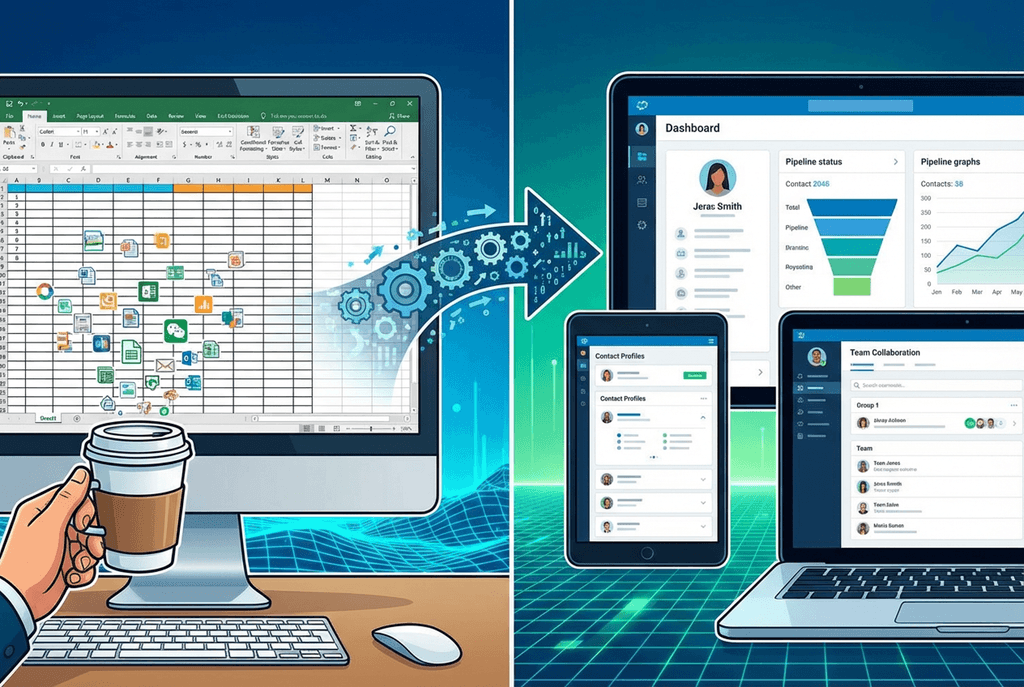
Data fragmentation occurs when information lives in disconnected systems that don't communicate. Marketing automation sits separate from the CRM. Sales pipelines exist in spreadsheets. Customer support logs tickets in a different platform entirely. Each system holds valuable information, but none of them talk to each other.
Research from Harvard Business Review found that poor data quality costs organisations an average of $15 million annually in lost productivity and missed opportunities. For Australian businesses, the impact is equally significant. A 2023 study by Data61, CSIRO's data innovation arm, revealed that 63% of Australian organisations struggle with data silos, limiting their ability to make informed strategic decisions.
The real cost extends beyond direct financial impact. Fragmented data creates:
Delayed decision-making when executives wait days for reports that require manual creation
Lost sales opportunities when leads slip through gaps between systems
Inconsistent customer experiences when support teams lack visibility into previous interactions
Wasted time as employees manually transfer information between platforms
Reduced confidence in business intelligence when conflicting reports tell different stories
What a Proper Data Strategy Actually Delivers
A well-designed data strategy doesn't just solve technical problems. It fundamentally changes how organisations operate.
Unified Customer View
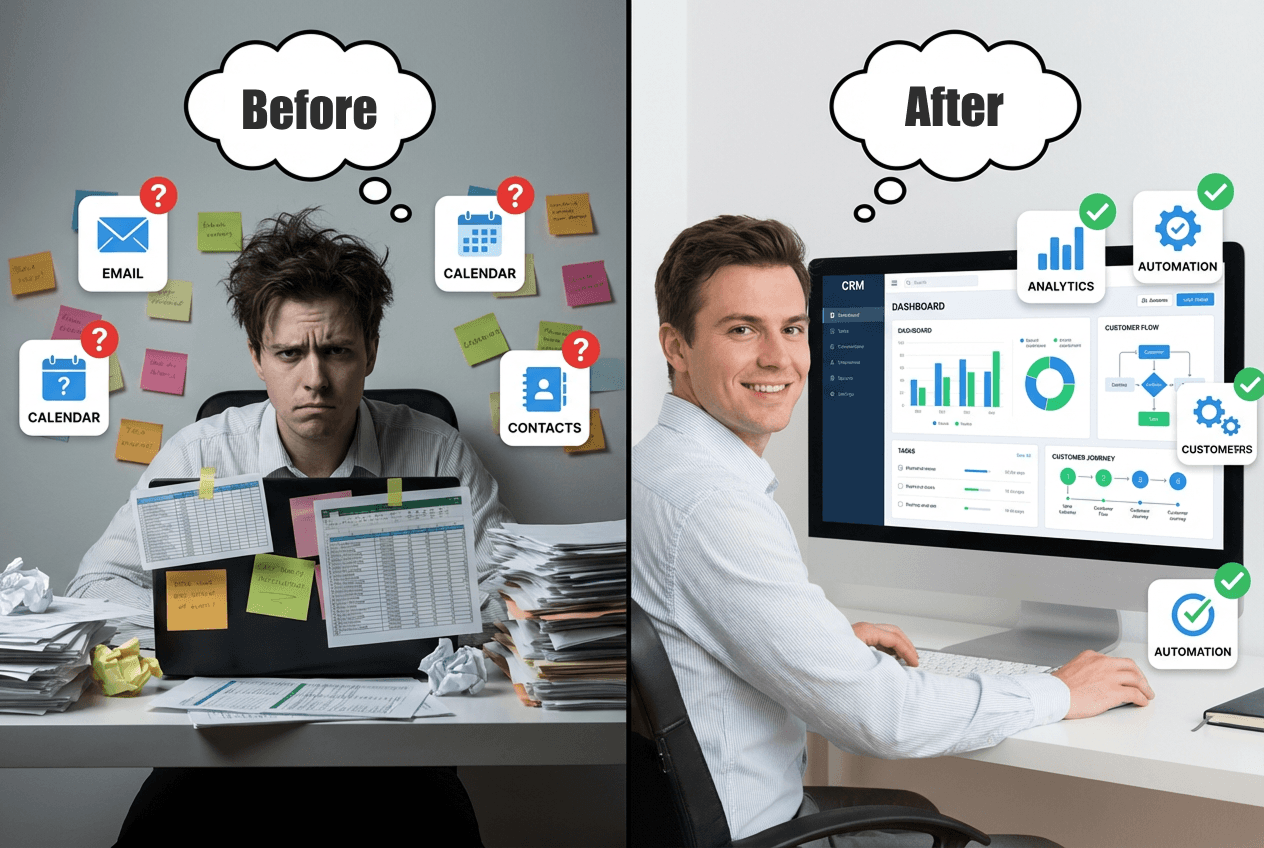
When all customer data flows into a central system, every team member sees the complete picture. Sales representatives know which marketing campaigns brought in each lead. Support teams access full purchase history and previous conversations. Marketing can track which content influences buying decisions. This unified view transforms customer relationships from fragmented touch-points into cohesive journeys.
Real-Time Visibility
Manual reporting creates lag time between events and awareness. By the time leadership reviews last month's performance, conditions have already changed. Integrated systems provide real-time dashboards that surface issues immediately and highlight opportunities while they're still actionable.
According to research published in the MIT Sloan Management Review, organisations using real-time data analytics achieve 5-6% higher productivity and profitability than competitors who rely on delayed reporting.
Predictive Capabilities
Historical data becomes exponentially more valuable when properly structured and analysed. Patterns emerge that would remain invisible in fragmented systems. Which customer segments show the highest lifetime value? What behaviours indicate purchase intent? Where do prospects typically drop out of the sales process?
A study by Deloitte Access Economics found that Australian organisations leveraging predictive analytics report 23% higher revenue growth compared to those relying solely on descriptive analytics.
Operational Efficiency
Automation becomes possible only when systems integrate properly. Lead capture, scoring, routing, nurture sequences, task creation, notification triggers, these workflows eliminate hours of manual work whilst ensuring nothing falls through cracks.
The Australian Industry Group's 2024 National CEO Survey identified data integration and automation as top priorities, with 78% of respondents planning significant investment in these areas over the next two years.
The Foundation: Clean & Connected Data
Building an effective data strategy starts with foundations, not fancy dashboards.
Data Audit
Before integrating systems or building reports, organisations need clarity on what data they actually have. A thorough audit identifies:
Which systems contain customer information
What fields are captured (and what's missing)
Data quality issues like duplicates, outdated records, or incomplete information
Integration gaps where information should flow but doesn't
Data Governance
Without clear rules about data standards, quality degrades quickly. Effective governance establishes:
Field definitions and naming conventions
Data entry requirements and validation rules
Update responsibilities and ownership
Access controls based on roles
Retention policies that comply with privacy regulations
The Office of the Australian Information Commissioner (OAIC) guidelines on data governance emphasise that proper data management isn't just good practice, it's increasingly a legal requirement under the Privacy Act and Australian Privacy Principles.
System Integration
Integration transforms isolated data stores into connected infrastructure. Modern approaches include:
Native integrations between platforms designed to work together
API connections for custom requirements
Middleware platforms that orchestrate data flow between multiple systems
Data warehouses that consolidate information from disparate sources
Building for Different Stakeholder Needs
Effective data strategies recognise that different roles require different views.
Sales representatives need pipeline visibility, task lists, and customer context. Marketing managers require campaign performance metrics and lead quality indicators. Support teams want complete customer interaction history. Executives need high-level dashboards showing business health and strategic metrics.
Single systems can serve multiple stakeholders when properly configured with role-based access and customised views. This approach maintains data consistency whilst providing relevant information to each user.
Common Obstacles and How to Address Them
Legacy System Constraints
Older systems often lack modern integration capabilities. Solutions include middleware platforms that bridge legacy and modern systems, phased replacement strategies that minimise disruption, or API development for custom connections.
Change Management
Technical implementation represents only half the challenge. Getting teams to adopt new systems and processes requires clear communication about benefits, comprehensive training programs, executive sponsorship and accountability, and quick wins that demonstrate value early.
Research from McKinsey & Company shows that 70% of change programs fail due to employee resistance and lack of management support, not technical issues. Successful data strategy implementation requires equal focus on people and technology.
Budget Constraints
Comprehensive data transformation requires investment. Organisations with limited budgets can adopt phased approaches that prioritise highest-impact changes first, demonstrate ROI before expanding scope, and leverage existing systems more effectively before replacing them.
Measuring Success
Data strategy initiatives need clear success metrics. Relevant indicators include:
Time saved on manual reporting and data entry
Improvement in data quality scores
Increase in sales conversion rates
Reduction in customer response times
Revenue attributed to data-driven decisions
User adoption rates across systems
Taking the First Step
Rethinking your data strategy doesn't require immediate wholesale transformation. Start with assessment.
Map your current systems and data flows. Identify the most painful gaps. Calculate the cost of existing inefficiencies. Define what success would look like for your organisation.
This foundation enables informed decisions about priorities, investment, and approach. Some organisations need better integration of existing systems. Others require new platforms. Many simply need to leverage capabilities they're already paying for but not fully using.
At Offline Insight, we specialise in helping Australian businesses unify their fragmented technology stacks into cohesive data ecosystems that drive measurable results. Our team combines technical expertise with commercial acumen to deliver practical solutions that turn business information into profit.
References
Australian Industry Group (2024). National CEO Survey.
Data61, CSIRO (2023). Australian Data Strategy Report.
Deloitte Access Economics (2023). Analytics and Australian Business Performance.
Harvard Business Review (2022). The High Cost of Poor Data Quality.
McKinsey & Company (2023). The People Side of Digital Transformation.
MIT Sloan Management Review (2022). Real-Time Analytics and Business Performance.
Office of the Australian Information Commissioner. Privacy Act 1988 - Australian Privacy Principles Guidelines. https://www.oaic.gov.au
Written by:
Lewis is the Founder & Director of the Colbert Group of Companies, the parent company of Offline Insight. Lewis has a decade of experience, specialising in marketing and data strategy, Lewis has worked with teams worldwide to realised their goals though marketing strategy, system design and creating operational efficiencies. Lewis leads the day-to-day operations of Colbert Group and works closely with Clients to realise their goals.
Disclaimer
Information provided by Colbert Group and it's associated entities (such as Offline Insight) is for general purposes only, offered "as is" without warranties. We are not liable for damages arising from use of our content or services. This does not constitute professional advice; consult qualified professionals for specific situations. Third-party content is not endorsed by us. Use at your own risk.